Why Mondonomo
Names are the part of language that does not generalise. Every other kind of word can be learned from context; a name has to be recorded. Mondonomo records them: what a name means, who carries it and where, how it is written in each script it is used in, and which official register attests it.
The pages on this site are the reference work. The same data runs behind an API for the people who need it in bulk.
Where this came from
Mondo nomo is Esperanto: world and name.
It began at a party, with a man who had stopped correcting people. His name was hard for the people around him to pronounce, his work was all introductions, and at some point he decided it was easier to answer to something else. The friend who noticed thought that was a shame — the name suited him, and it was the only one he had. That conversation is the whole of the idea: a name is not a label a person can be talked out of.
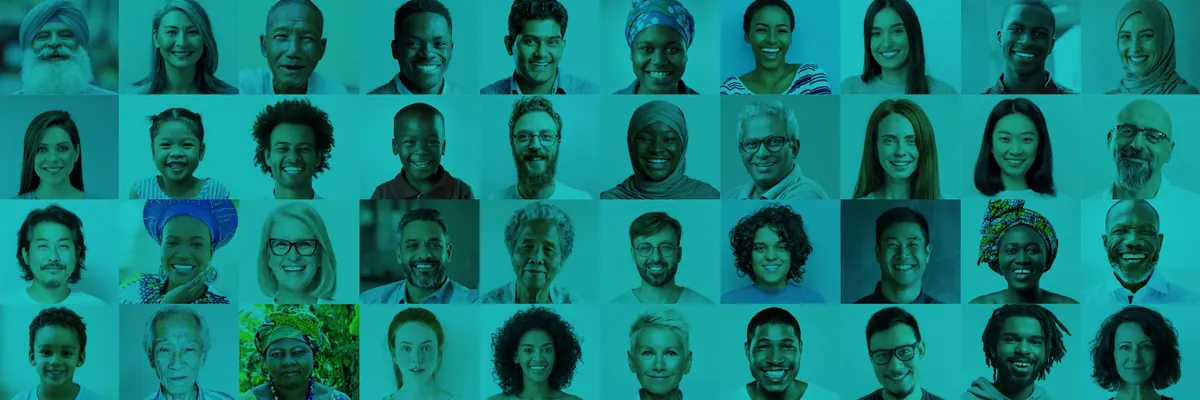
Be proud of your name and its meaning. Every name known deserves its due, and we do not rank them by how hard they are to pronounce or by the script they are written in.
That is a claim a reference work has to be able to show rather than assert, so here is where it is kept: every spelling we hold is served in the script it is written in and never only in transliteration, the transliterator romanises every script it holds a model for, and a country page prints its register's own names in its register's own alphabet. Where we cannot do it, the page says so instead of rounding the gap away.
What the asset is
- 18.4B+
- Records analyzed
- 887.7M+
- Name entries
- 257.4M+
- Distinct spellings
- 191.2M+
- Named-entity spellings
Rows ingested from every source. Records are not people — one person can appear in many. method
Distinct (spelling, language) pairs — the dictionary-style count.
Unique spellings across every label, dictionary words and unknowns included.
Unique spellings labelled person, organization or place.
Every figure on this site comes from one generator run, and the label and the denominator belong to the figure rather than to the page quoting it. That is not fastidiousness: the same number was once published as “name forms” on one page and “distinct spellings” on another, which made both unfalsifiable.
How the counts stack
The four numbers above are a ladder of units, not rival claims about the same thing. Each is a subset of the one before it, and quoting one without its denominator is how name statistics come to be wrong in public.
- 118.4B+ records analyzedRows ingested from every source. Records are not people — one person can appear in many.
- 2887.7M+ name entriesDistinct (spelling, language) pairs — the dictionary-style count.
- 3257.4M+ distinct spellingsUnique spellings across every label, dictionary words and unknowns included.
- 4191.2M+ named-entity spellingsUnique spellings labelled person, organization or place.
Records are not people. One person appears in several sources, and a name page says so on every figure it derives from a record count. What each number means, and how it can be wrong.
How a page is built
A country page starts from the official registers that country publishes, if it publishes any. Where two registers disagree the page shows both and says why they differ, rather than picking one and calling it the answer. Where no register exists the page says that too, and the ranking it shows is our record corpus alone: 34 of the 250 country pages are in that position and each one admits it in its own words.
A name page works the same way. The spellings, scripts and geography come from the corpus; the etymology is cited to the work that made the claim; the evidence panel lists the registers that attest the spelling and links to them. Licensed reference works are named as attesting a name and never quoted with a figure, because their figures are not ours to publish.
Research
The methods behind the corpus are published and citable.
- Navigating Linguistic Similarities Among Countries Using Fuzzy Sets of Proper NamesDavor Lauc · Names: A Journal of Onomastics, vol. 72 · 2024 · PDFThe foundational onomastic-method paper — fuzzy-set similarity over forename inventories across 88 countries recovers known linguistic families and surfaces surprising diaspora affinities.
- Towards Analysis of Biblical Entities and Names using Deep LearningMartinjak, Lauc & Skelac · Int'l Journal of Advanced CS & Applications, vol. 14, no. 5 · 2023Applied NLP and social-network centrality metrics to the Gospel of Mark across three translations — the methodological seed for the Named by God project.
- The Formalization of Multilingual Etymologies into Semantic NetworksDavor Lauc, Tomislava Lauc, Vjera Lopina · DH Benelux 2024, Leuven · 2024Methodology behind Formalised Etymology — turning prose etymological knowledge into a typed graph with Form, Etymon, and Concept nodes.
- Ukrainian Names and Their Geographic DistributionDavor Lauc · Mondonomo Research · 2024 · PDFAnalysis of Ukrainian given names and surnames using the Mondonomo corpus — geographic spread, cross-border variants, and diaspora distribution.
Contact
For API access, licensing, or a data question about a specific country or name, start here.